Hi, I'm Ananya Deoghare.
A
Senior machine learning engineer with 5+ years building production ranking systems that drive revenue. I enjoy turning complex business challenges into ML solutions with real impact.
About
I am a Senior Associate Algorithm Engineer at QuinStreet, where I own the end to end machine learning ranking architecture for the Personal Loans vertical, spanning CTR and conversion modeling, optimal allocation, constrained marketplace optimization, simulation, and online experimentation. Over 5+ years in AdTech and data engineering, I've focused on production ML systems where modeling decisions move revenue. Day to day, my work centers on matching consumer intent to the right offers in real time, testing ranking changes offline in a large scale simulator before any production rollout, and guarding results with experimentation and monitoring. I also help set modeling standards through design reviews.
I hold a Master's in Electrical and Computer Engineering from UCLA, where my research on equitable remote health sensing was published at SIGGRAPH 2022. Earlier, I spent two years as a Software Engineer at Accenture in India, building data solutions for the healthcare and pharma sectors, and interned in ML at VidMob.
I'm passionate about using technology to drive meaningful impact, and I thrive on transforming complex challenges into practical, human centered solutions. Outside work, I pursue Bharatnatyam, an Indian classical dance form, and cooking, both of which keep me focused and composed.
Experience

- Ownership & Business Impact: Technical owner of the end to end ML ranking architecture for the Personal Loans vertical; scope expanded in 2026 to include the conversion model alongside CTR models, owning ranking performance, deployment strategy, and experimentation.
- Technical owner of Personal Loans ML ranking for 3M+ annual inquiries, driving expansion from subprime to higher quality traffic, about a $2M margin opportunity.
- Built the Personal Loans XGBoost vendor conversion model and own the Personal Loans CTR model, with weekly cron retraining; a persistent 90/10 holdout against the legacy lookup baseline shows about a 10% profit lift on a $1M+ margin segment.
- Lead a margin preservation initiative combining CTR and CVR predictions to filter unprofitable leads before purchase, projecting an 8 to 12% reduction in wasted lead spend.
- Own the Cython simulation framework, which stress tests ranking strategies before release and monitors Auto Insurance production health daily; cut runtime by 50% and maintain parity with live production logic.
- Help onboard new algorithm engineers on ranking architecture and code reviews; authored team code quality and model release standards, now followed team wide.
- Led cross functional design reviews for the next generation ranking engine, aligning data science objectives with infrastructure constraints.
- Tools & Techniques: Python, XGBoost, Scikit-learn, Cython, Redshift, MySQL, Feature Engineering, SHAP, A/B Testing, Cross validation, GBM, Ranking Models
- Built and productionized a conversion prediction model for the Personal Loans funnel, complementing CTR models to optimize downstream conversion.
- Optimized an automated simulation testing suite using Cython, achieving 95% fidelity with production environments and significantly improving test coverage and computational efficiency.
- Engineered high impact feature sets using domain specific aggregations, temporal windows, statistical summaries, and one hot encoding—improving model generalization and reducing overfitting.
- Implemented advanced supervised learning models (e.g., Gradient Boosting Machines, Logistic Regression), using Bayesian optimization and cross validation to fine tune hyperparameters and boost ranking accuracy.
- Conducted in depth feature importance analysis (e.g., SHAP, permutation importance), removing low signal features without sacrificing performance.
- Delivered production ready machine learning pipelines in collaboration with product and data engineering teams, enhancing metric tracking for advertiser engagement.
- Implemented the Hungarian algorithm for optimal constrained ranking assignment, validated against the greedy baseline through staged online A/B tests, lifting margin revenue 2.5 to 8% depending on traffic; now live in Auto Insurance and Banking.
- Tools & Techniques: Python, Scikit-learn, Cython, Redshift, MySQL, Feature Engineering, SHAP, A/B Testing, Cross validation, GBM, Hungarian algorithm, Data Pipelines, AdTech, Ranking Models

- Built deep learning models in Python to score creative ad assets and support automated engagement prediction and recommendation pipelines within an advertising analytics platform.
- Designed and implemented deep learning models for computer vision tasks—such as object detection and image scoring—resulting in a 25% increase in the accuracy of ad engagement classification.
- Applied supervised learning and statistical modeling techniques to predict user interaction rates, followed by rigorous A/B testing and performance benchmarking.
- Engineered modular, reusable components for data preprocessing, model training, and evaluation, reducing pipeline execution time and improving development efficiency across ML iterations.
- Collaborated with cross functional teams (data, product, and engineering) to deploy scalable AI driven insights into production through predictive analytics.
- Tools & Techniques: Python, PyTorch, Scikit-learn, Computer Vision, Deep Learning, MySQL, Git, SQL, A/B Testing, Feature Engineering

- Automated pharma sales ETL workflows in Python, SQL, and Apache Hive, cutting analysis time by 50%.
- Built drug sales analytics and Tableau dashboards, lifting competitor match rates by 20%.
- Onboarded 10 graduate engineers.
- Global Innovation Challenge Semifinalist at Accenture.
- Tools: Python, SQL, Apache Hive, Tableau
Research, Publications and Teaching

- Wrote 2 chapters for a book on Computational Imaging, which was published by MIT Press.
- SIGGRAPH 2022 spotlight: Blending Camera and 77 GHz Radar Sensing for Equitable, Robust Plethysmography.
- Collaborated with a team of engineers to develop and implement a state of the art Shift Robust Loss Function for rPPG, resulting in decreased error by 40%
- Worked with team to diagnose skin tone bias in medical application using multimodal fusion between radar and RGB data. As a result, the team was able to develop an algorithm that improved accuracy by 75%. This work is the SIGGRAPH 2022 publication listed above.
- Tools: Python, OpenCV, Keras, Tensorflow, PyTorch, Computer Vision, Computational Robotics, Scipy

- Collaborated with Dr. Sundaram and a team of researchers to pioneer new methods for faster and more accurate diagnosis of Autism.
- Successfully cleaned and rearranged ABIDE Dataset (depending on correlation between different regions of the brain) to improve data correlation, leading to more accurate predictions.
- Developed and optimized deep neural networks to analyze fMRI scans for early detection of Autism, achieving an 80% accuracy rate on a large set of cleaned data.
- Code: GitHub repo. Report: Project report.
- Tools: Python, PyTorch, TensorFlow, OpenCV, MATLAB, Research, Scipy, Pandas

- Teaching Associate at UCLA: led 2 discussion sections and 2 lab sessions, guiding students in mathematical modeling in Python.
- Evaluated student work, gave feedback on assignments, and supported faculty with course preparation and grading.
Projects
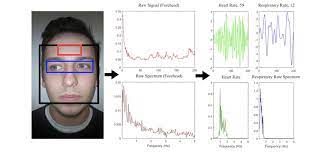
- Tools: Computer Vision, Python, OpenCV, Haar Cascade
- Provide a 10 to 30 seconds video
- Process the video using Signal processing
- Output is the approximate heart rate of the person in the video
- An error rate of 3 to 4 heartbeats
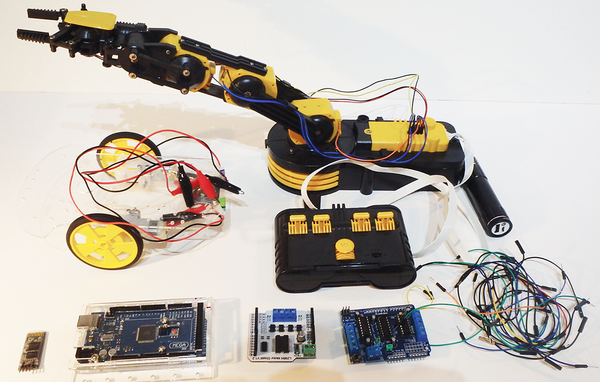
An Automatic Garbage Segregator Arm using Raspberry Pi
- Tools: Python, OpenCV, Deep Learning, Transfer learning, Pytorch, Tensorflow, Pandas
- Engineered a crane that could segregate waste into biodegradable, non biodegradable, electronic waste with an accuracy of 95.18%.
- Tested various Feature Extraction techniques like PCA, LDA and Convolutional Neural Networks. Report
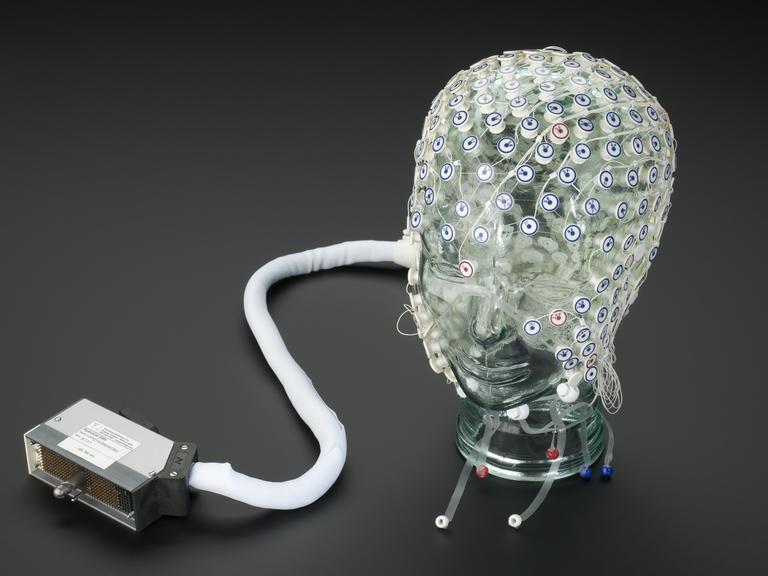
Multi Class EEG Motor Imagery Classification Using Deep Learning Architectures
- Tools: Python, Computer Vision, Deep Learning, OpenCV, Keras, Tensorflow, Pandas
- This project explores deep learning techniques for multi- class classification of EEG signals for motor imagery tasks.
- Various neural network architectures such as CNNs, LSTMs, RNNs, VAEs, Transformers, and attention are implemented and tuned.
- Effects of preprocessing and time duration on accuracy are analyzed. Results from training on every subject and the entire dataset are compared.
- The project shows the potential of deep learning techniques for EEG signal analysis and classification, highlighting the accuracy of the models and their ability to learn underlying patterns in EEG data. Report
Built a small replica of Google Home using various PCBs and Sensors
- Tools: Python, OpenCV, Raspberry Pi, Sensor tech
- Successfully built a Google Home prototype using Raspberry Pi, demonstrating an understanding of various types of communication methods.
- Built an embedded voice assistant hardware prototype, learning Raspberry Pi and voice interaction through self directed experimentation.
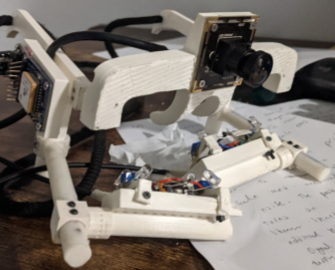
Mono SET: 6 DOF Monocular Slam for Eye Tracking
- Tools: Python, Computational Imaging, OpenCV, Raspberry Pi, Sensor tech
- Studied the effectiveness of indoor tracking for gaze estimation using ORB-SLAM using a custom built eye gaze wearable setup.
- The gaze of the user is estimated using a modified U-Net architecture to extract pupil parameters from a stationary pose.
- An Inertial Measuring Unit (IMU) and Fish Eye camera uses the ORB-SLAM Feature Extractor and Indoor SLAM Environment to track the orientation and movement of the user. The gaze prediction using the data from the ORB-SLAM estimation is used to calculate the distance between the user and the gaze point which is further compared with the ground truth.
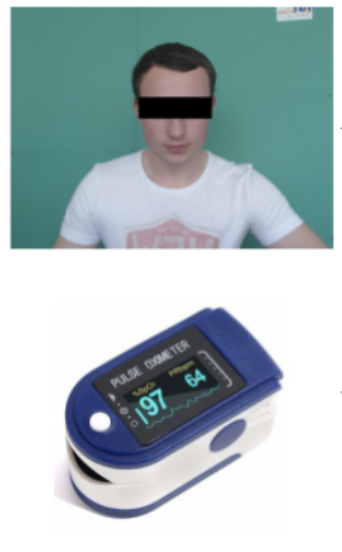
Shift Robust Loss Function for remote PhotoPlethysmoGraphy (rPPG)
- Tools: Python, OpenCV, Object Detection, Computer Vision, Deep learning
- rPPG is a technique that uses slight color changes in a person’s face to find remote PPG signal and estimates heart rate from this signal using signal processing techniques.
- We used an RGB camera to obtain face videos of volunteers and a finger pulse oximeter to obtain the ground truth PPG signal while collecting data from rPPG. These two devices are not hardware triggered, so there is a slight lag between the frames obtained from the camera and PPG signal
- State of the art methods require the ground truth data to be exactly aligned with the signals.
- To address this problem, we propose a novel shift robust loss function for regression that enables the network to learn from misaligned data to achieve better results than recent methods Report
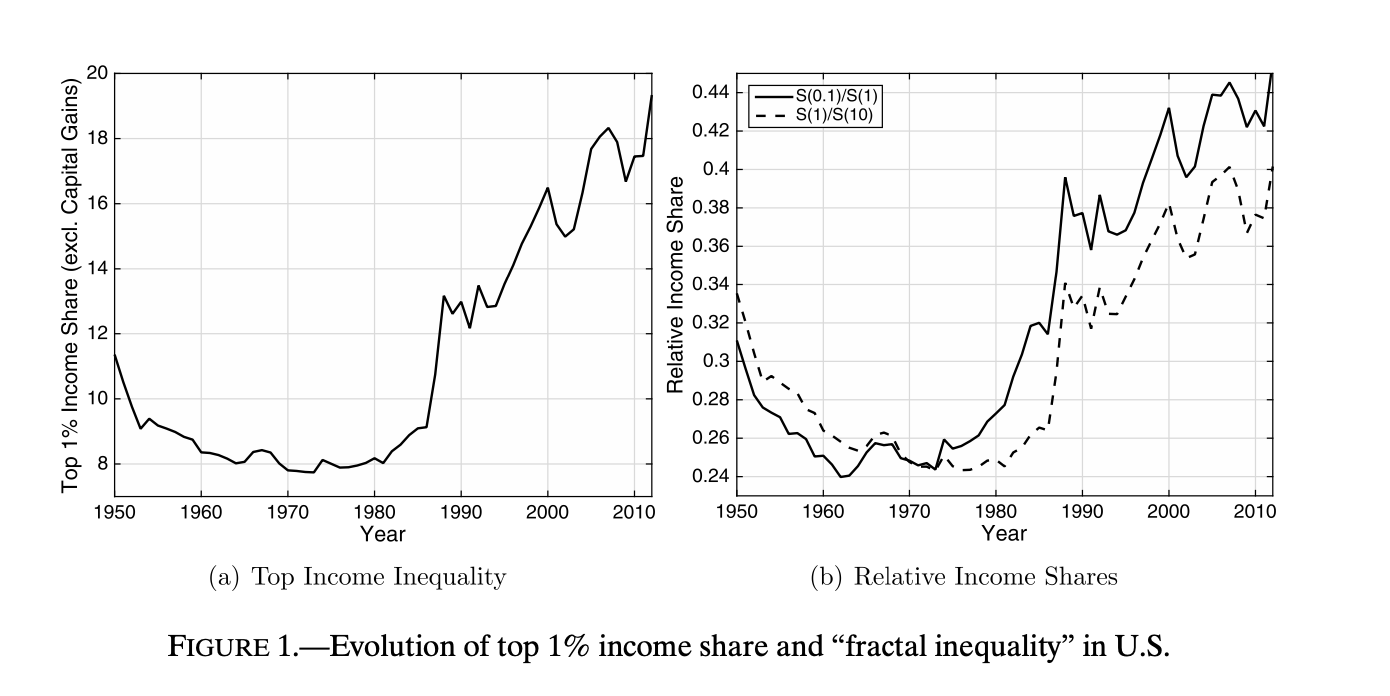
Summarized the paper "The Dynamics of Inequality"
- Tools: Stochastic processes, ito's Calculus, Brownian Motion
- United states has seen a rapid growth in top inequality in the past forty years, i.e. the rate at which super rich are getting richer is more than the rate at which rich are getting richer, due to which the inequality between the two groups is increasing.
- In the two deviations that this paper proposes, they consider two reasons namely, "changes in skill prices" or "rise in superstar entrepreneurs or managers". Report
Skills
Ranking and Experimentation
Languages and Core Tools
ML and Scientific Libraries
Data and Cloud Tools
Education
University of California, Los Angeles
Los Angeles, USA
Degree: Master of Science in Electrical and Computer Engineering
CGPA: 3.97/4.0
Dates: Sep 2021 to Oct 2023
Relevant Coursework:
- Computer Vision
- Large Scale Data Mining
- Large scale Social and Complex Networks
- Neural Networks and Deep Learning
- Machine Learning and Modeling in Bio Engineering
- Computational Robotics
- Computational Imaging
- Decision Making in Stochastic processes
- Technology Management
- Physics and Informatics of Medical Imaging
Bengaluru, India
Degree: Bachelor of Technology in Electronics and Communication Engineering
CGPA: 8.5/10
Dates: Aug 2015 to Aug 2019
Relevant Coursework:
- Introduction to Python, C & Embedded Systems
- Probability and Random processes
- Linear Algebra
- Information Theory and Coding
- Machine Learning
- Digital Signal Processing
- Speech Processing